
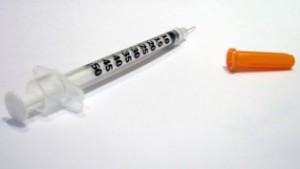
The British Association of Aesthetic Plastic Surgeons (Baaps) has warned that the unregulated dermal filler market could be the next scandal to rock the cosmetic surgery industry.
Nigel Mercer, former president of Baaps, has made public his distain at the fact that fillers are ‘completely unregulated’, and that anyone who has completed a half-day course are allowed to inject them into patients.
He is unhappy that the effect of this has been to allow hairdressers and beauticians to start offering the wrinkle reducing injections as well as the explosion of the availability of self-injection kits from the internet.
Mr Mercer said: ‘It is a ticking timebomb. We believe [fillers] should be a prescription drug only injected by a doctor. We are contacted by patients who have ended up with unsightly lumps under the skin which can only be removed with surgery, people left with scars after one of their arteries was injected and people can even go blind if it is injected too close to the eye.
‘There are reputable providers, but you see all the emails offering dermal fillers from China and we have no idea what they contain. You can make this stuff using a chemistry set.’
The announcement comes as Baaps pushes for strict rules governing the advertisement of aesthetic treatments such as Botox and dermal fillers – as well as more intrusive procedures such as liposuction, breast augmentation and facelifts.
Dermal fillers are an excellent way to ‘plump’ out lines and wrinkles and are a very successful way to look younger. Follow our tips to ensuring your treatment is safe:
1. Who is the physician associated with the practice? Is their name in clear site at the office? Are you informed of their name and Board Certifications?
2. When is the doctor on site? Do they have an office on site or are they only available by phone?
3. Do patients/clients have access to the doctor?
4. What is the specific speciality of the doctor?
5. What is the specific training and experience of the treatment provider, if it’s not the doctor? How many of these procedures have they done? how long have they worked in aesthetics? Do they hold any special certifications?
6. How often is the treatment provider in contact with the doctor?
7. If a patient has an unexpected reaction, what is the emergency plan? Who is in charge of that plan? Do they have the appropriate qualifications to manage that reaction?
8.What kind of evaluation must patients undergo before their first treatment? Was your consultation performed by a medical professional or skincare specialist?
9. Do you have access to your provider after hours? Do they have prescriptive priviledges to manage any side effects?
Your Comments