
Carol Spenser has helped thousands of leading public figures, including TV personalities, politicians and business leaders, improve their confidence, career prospects and personal lives through her unique image and style advice. Carol explains her ten steps to help women of all ages begin their own transformation.
1. LOOK GOOD, FEEL GREAT
If you look good, you will feel good and appear more confident. As a result, people will respond positively to you, which will make you feel even better about yourself. Your extra confidence will invite ever more positive feedback from those around you, and boost your self-esteem even more. This is a no-fail situation. It is not vain or selfish to make ‘looking good’ a priority in your life.
2. ACCEPT YOUR SHAPE
You can improve your looks and confidence overnight – if you accept what you are, and make the most of it. Give up any attempt to change your basic shape with excessive diet and exercise. Diet and exercise help modify problem areas (a flabby tummy, untoned thighs) and are important for good health. But it’s your bone structure which determines your basic shape – i.e. the length of your ribcage, width of shoulders, hip shape, height etc. Start dressing to suit your natural figure – not some ‘fantasy/ideal’ shape.
3. KEEP FOLLOWING FASHION
Stop thinking you are too old for fashion – this dangerous tendency surfaces anywhere from the 40’s onwards. In fact, as you age it’s essential you reassess your style as your shape, hair and skin colour will all change to some degree (after pregnancy, after the menopause etc), and you need to adapt your hairstyle, make-up and clothes to suit. Fashionable accessories are the easiest way to follow trends as you get older and should become essential elements of your wardrobe.
4. ACCENTUATE YOUR ASSETS
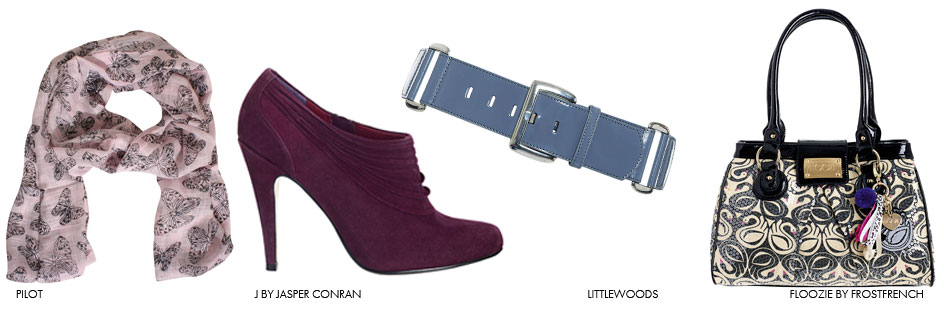
Stop buying clothes that aim to disguise your bad points, but actually draw attention to them (sad, but true). A patterned jumper does not disguise a big bust, it shouts about it; plain clothes with great accessories work better. A short top worn loose over trousers does not hide big hips – it draws a very neat line around them (and can completely cover up a trim waist above). If you have a waist, tuck the shirt in and wear plain skirts or trousers and a belt. A high neck does not cover up a short neck or double chin; it just emphasises it. A lower neckline will give the illusion of a longer, slimmer neck.
5. DEVELOP PERSONAL STYLE
Teenagers, women and men in their 20’s, wear whatever ‘look’ that’s in, and can probably get away with it. However, women in their 30’s and beyond should develop their own personal style. Today’s women, in fact, are very lucky as fashion is now more flexible and allows for a great deal of choice. There isn’t just ‘one look’ that everyone has to buy into. You can wear short or long skirts; narrow or wide leg trousers; high or low neck tops. Once you’ve discovered the ‘look’ that suits you, you will always find versions of it in this season’s ranges.
6. SORT OUT YOUR WARDROBE
Put to one side anything you haven’t worn for at least a couple of years, and concentrate on the items you like wearing, that make you feel good and usually invite compliments – they’re probably your best style. Separate your garments – skirts, shirts, trousers, T-shirts and jackets should be hung in five separate sections. We all make the mistake of teaming the same blouse with a suit; and the same T-shirts with jeans etc – thinking we can’t mix and match them up. Take the things you love to wear and start experimenting. Try the jeans with a white blouse and jacket rather than a baggy sweatshirt. Team the black suit you adore (but only ever wear with a blouse and heels) with a white T-shirt and black loafers. When you do buy new clothes spend more on less – invest in a few good quality items you’ll want to wear to death and dress up or down with accessories and cheaper ‘must-have’ garments of the season.
7. ASSESS YOUR HAIRSTYLE
Study your face shape and features and see if they are softer or more angular. Always ‘go with’ your features rather than try to fight against them. For example, an angular face can take a sharp, slick style: a blunt edge at the bottom of a bob; angles in front of the ears; hair brushed back off the face or ‘severe’ up-do’s. Softer faces suit the opposite: bouncy curls, volume, flicks and ‘messy’ up-do’s.
8. APPLY THE SAME RULES TO JEWELLERY AND GLASSES
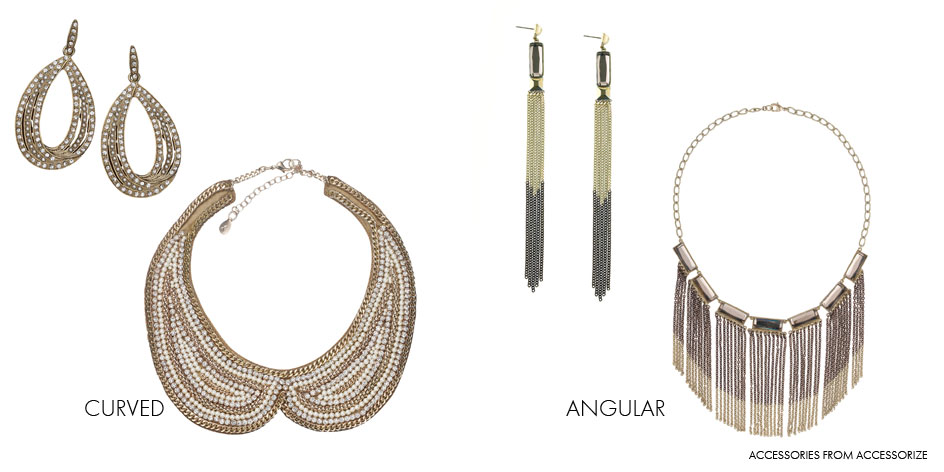
Angular faces (e.g. strong jaw, nose, cheekbones) should choose jewellery, particularly earrings and necklaces, made up of sharp lines e.g. squares, diamonds or straight-drops while a soft face (curved jaw, button nose, rounded cheeks) is complemented with curved lines (hoops, circles or pear-drops). When you are next choosing glasses, bear the same guidelines in mind: angular faces look more stylish and confident in rectangles, squares or cats-eyes; while softer faces suit ovals, curved or aviator styles.
9. DISCOVER YOUR COLOUR DIRECTION
Your colouring will fall into one of six Colour Directions – Deep, Light, Bright, Muted, Warm or Cool. Knowing this really helps you to choose your most flattering colour for cosmetics and other colours worn on or near your face – glasses, jewellery, scarves etc. The colour of your main clothing is not as important as its shape – wear colours you like or those which are in fashion as Outfit Shape is more important.
10. DISCOVER YOUR OUTFIT SHAPE
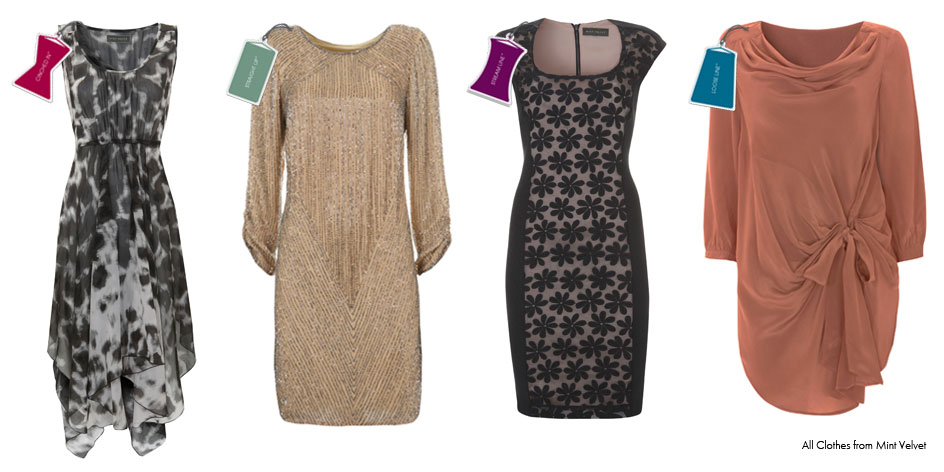
Forget about labelling your body as a pear, apple, brick, vase, violin or whatever… there are only four Outfit Shapes (which designers call silhouettes) each season. These are: CinchedIn, StreamLine, StraightUp and LooseLine:
• CinchedIn outfits have a lot of waist emphasis.
• StraightUp outfits have a linear look with little or no waist emphasis.
• StreamLine outfits have a semi-fitted look with only slight waist emphasis.
• LooseLine outfits have a soft, drapey look which just skim the body.
To find out more about Outfit Shapes and Colour Directions, go to www.styledirections.com. Women can take Carol’s easy Colour and Shape Tests as the first steps to developing their own confident, personal style.
Your Comments